FCS-28 · Gasoline Fuel Treatment
FCS-28 is CM’s gasoline (petrol) fuel-treatment product. Confirm the fuel specification, equipment and current product guidance, then agree how to measure performance.
Start with the fuel and the work
Passenger cars, delivery vehicles and other gasoline equipment do different jobs. Choose a measure that reflects yours, whether distance, paid kilometres, deliveries or operating hours.
Identify the fuel grade, supplier, ethanol or other blend information, existing additives and equipment model. Confirm compatibility and treatment instructions with CM before planning the test.
Keep the product identity clear
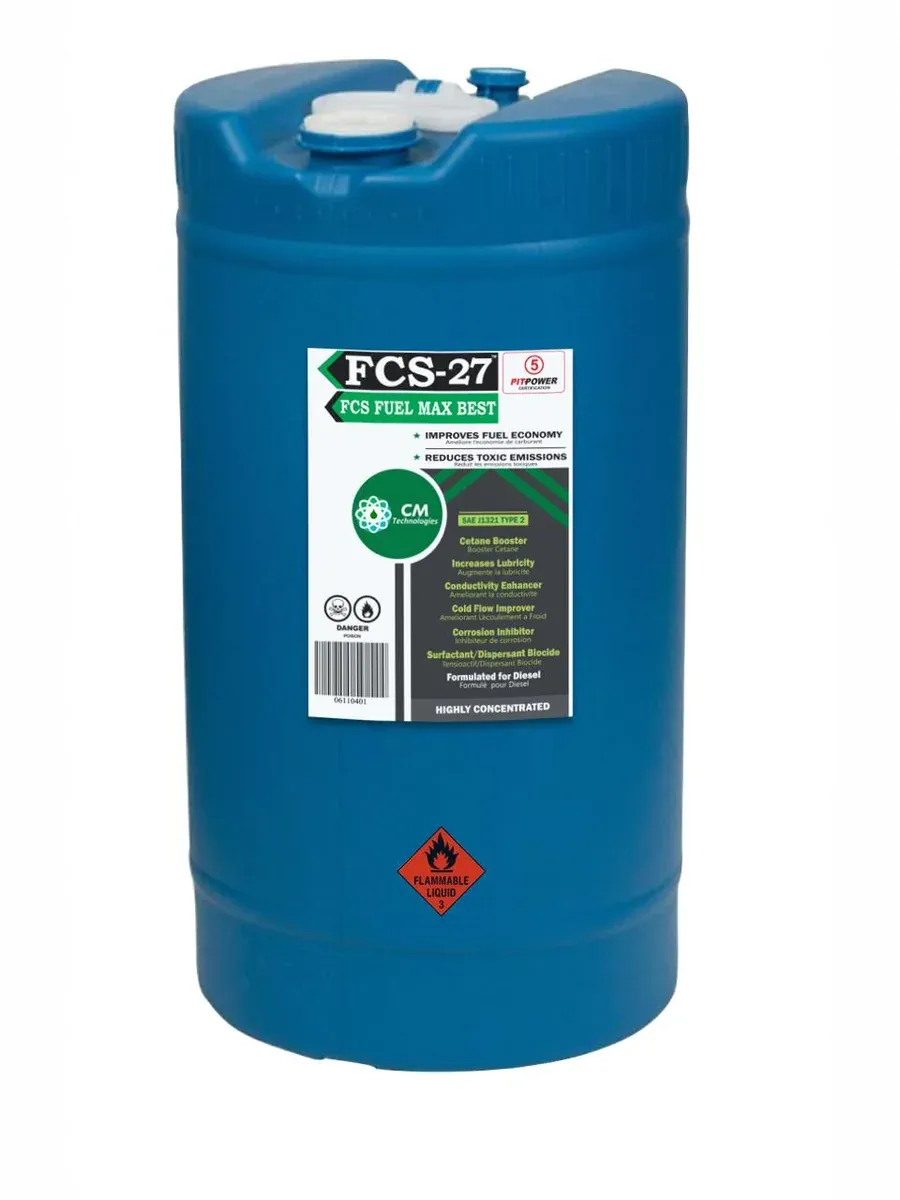
FCS-28 is identified as the gasoline product in the reviewed CM product material. FCS-27 is the diesel product. Product instructions, imagery and evidence need to retain that distinction.
Historical gasoline records use names such as FCS-1, FCS-2 or laboratory sample codes. Keep those names with the results and confirm their relationship to the current FCS-28 formulation before making a product decision.
Understand the gasoline evidence
The CM source library includes Beijing gasoline passenger-car comparisons and deposit-control material. The gasoline excerpts in CM-Technologies-2026 report a baseline of 6.6 L/100 km and treated runs labelled FCS-1 at 6.2 L/100 km and FCS-2 at 6.1 L/100 km. These are historical sample-specific observations.
Deposit records identify the sample, treatment concentration and test method. Deposits, fuel consumption and exhaust measurements describe different outcomes. Request the original report and tested product identity for the question you need to answer.
Design a useful operating comparison
For delivery and owner-operated vehicles, assess the value retained after product and implementation costs. An improvement in a fuel metric alone does not establish a household-income outcome.
- Record a baseline with the existing gasoline and a defined measurement method.
- Agree product identity, compatibility, dosing and blending before treatment.
- Track comparable routes, traffic conditions, loading and useful output.
- Record fuel volume, distance or completed work, and unusual operating events.
- Review repeatability and the net cost of doing equivalent work.
Bring the information needed to begin
Share your country, gasoline grade, equipment model, work pattern and refuelling records. Explain whether your main question concerns fuel use, deposits, fuel properties or exhaust measurements so CM can identify the relevant documents and evaluation.
Common questions
Do diesel test results establish FCS-28 performance?
Use gasoline-specific records and confirm the tested formulation. The CAT 3512 and Beijing diesel-bus records concern diesel applications.
What treatment rate should I use?
Request the current instructions for the confirmed FCS-28 formulation and intended application. A concentration shown in an older laboratory sample or diesel test is not a general gasoline dosing instruction.
Discuss a gasoline application
Share the application, operating context and technical question with CM.
Discuss a gasoline application →
Source material: CM Technologies 2026; CM Field Tests in Practice; CM FCS Technical Overview.